For a long time there was one accepted answer to where to buy original art: a gallery. Galleries still do real work, but they are now one door among several, and for a first purchase they are often the most expensive one. This guide covers the other places original work is actually sold, what each one gives you, and what it costs you.
If you have not bought anything yet, our guide on how to start collecting art covers the decisions that come before choosing a channel.
What you pay for in a gallery
A gallery selects artists, stages shows, builds context and stands behind what it sells. That is genuine value and it is paid for through a commission on every sale, commonly a substantial share of the price. It also means the price on the wall is not only about the work.
Research into pricing in the primary art market found that prices correlate positively with an artist’s reputation, as you would expect, but negatively with the reputation of the gallery selling the work (Schönfeld and Reinstaller, 2007, Journal of Cultural Economics). In other words, the name above the door is a separate variable from the name on the work. Knowing that the price carries more than one signal is the reason to look at what the other channels offer.
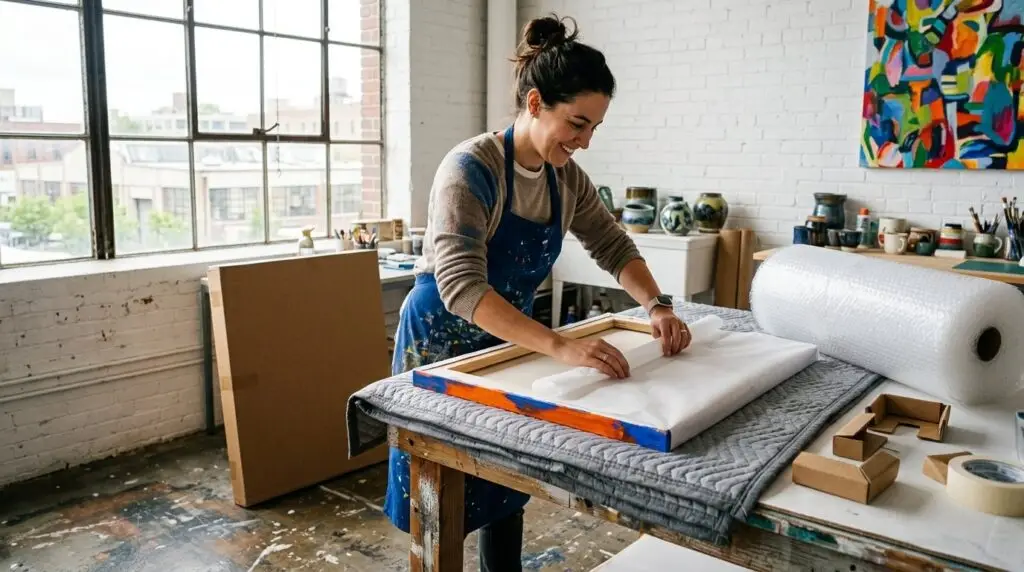
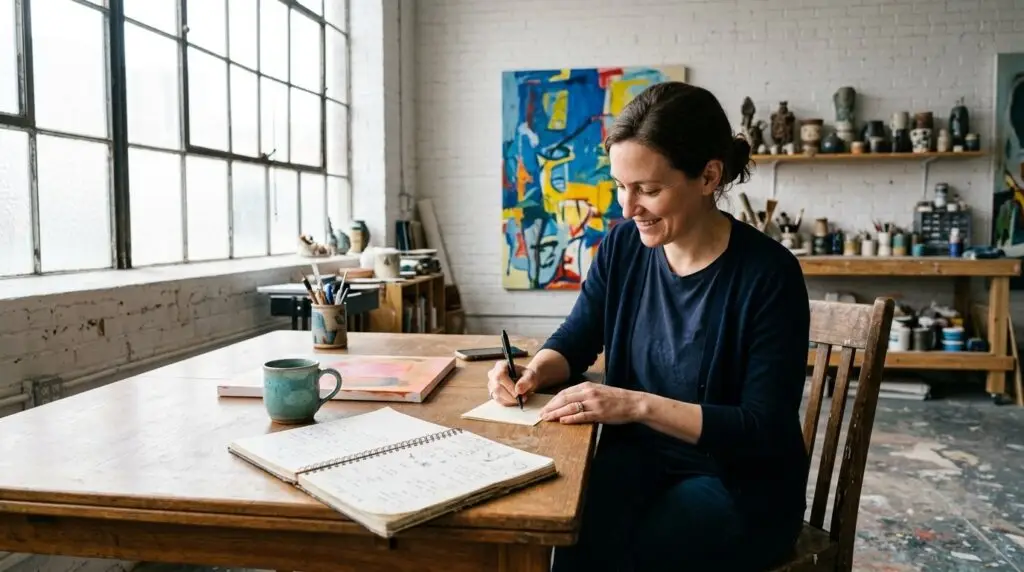
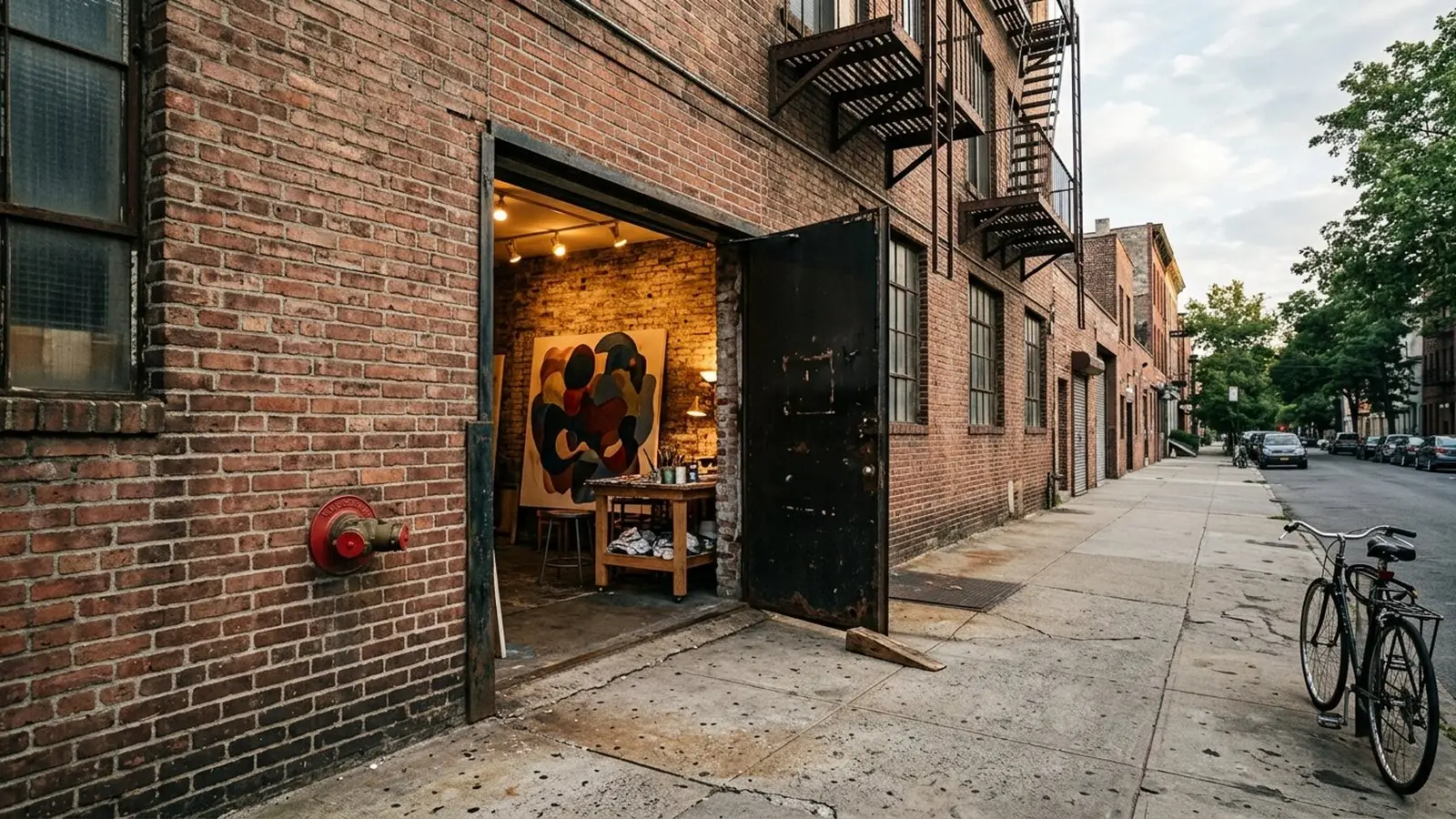
Directly from the artist’s studio
The studio gives you the most information for the lowest price. You see the work in person and in the light it was made in, you see what else exists in the series, and you can ask the person who made it anything about materials, process and care. There is no commission layered on top, so the same money either buys you a lower price or reaches the artist more fully.
It is also the only channel where you build a relationship rather than complete a transaction. Collectors who follow an artist over several years almost always started with a studio visit. If you have never done one, our guide to buying art covers what to ask and what to expect.
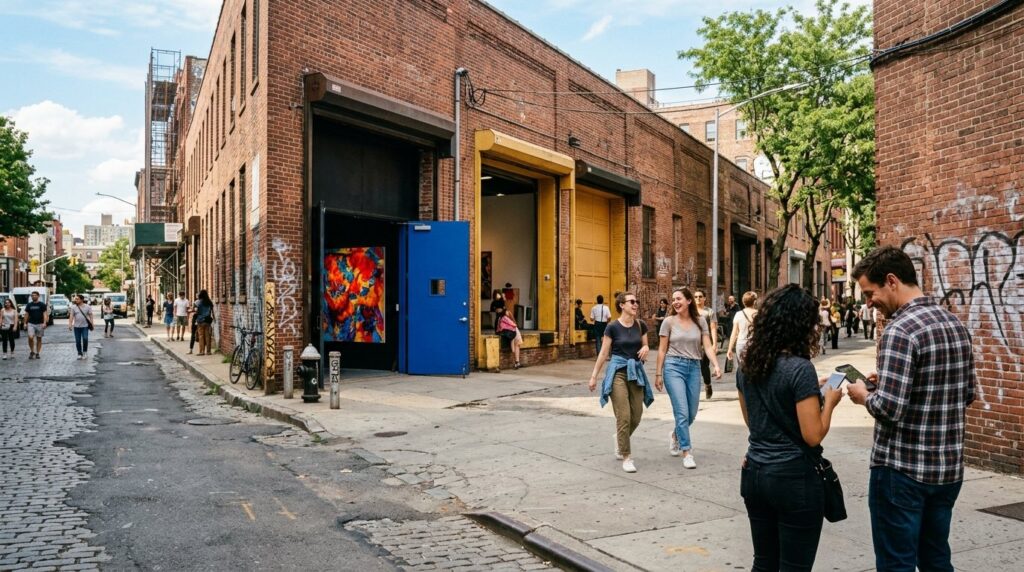
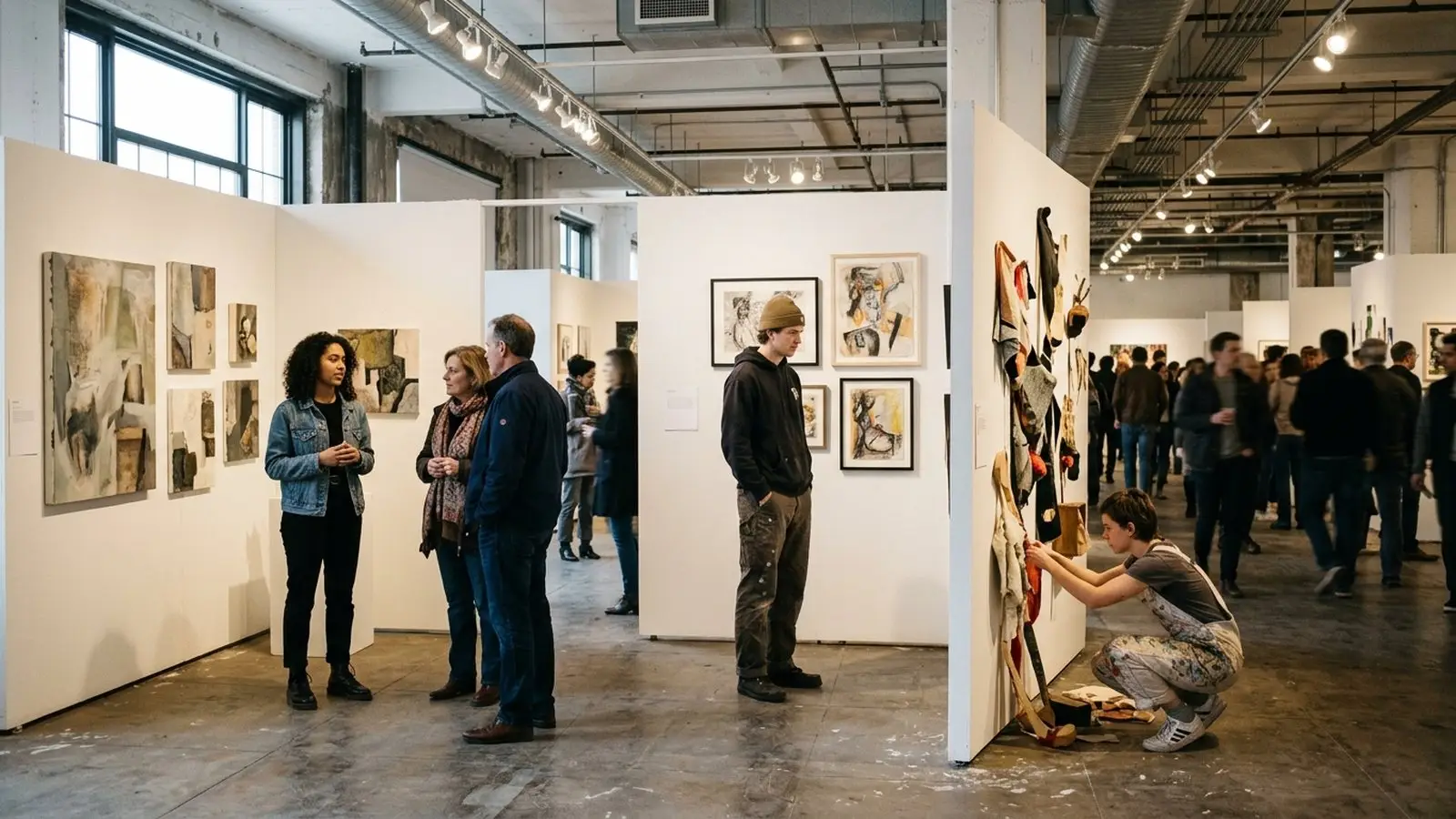
Open studio weekends
Once or twice a year, a neighborhood opens its studios at the same time. You can see dozens of practices in a day, entry is free, and nobody expects you to buy. It is the single most efficient way to find out what you respond to, and it is low pressure in a way that a gallery opening is not.
Degree shows and art school open days
Graduating students show finished bodies of work at prices that will never be that low again, and the work is genuinely original rather than a print run. You are buying without any track record to lean on, which is exactly why it is affordable. Buy what you actually like, not what you think will appreciate.
Online platforms and marketplaces
Online you get reach and convenience, and you lose the ability to see the surface. The information gap is the real risk, not fraud, and the mechanism markets built to close it is reputation. In an analysis of art auctions online, negative seller feedback was associated with significantly fewer bidders, a lower probability of sale and a significantly lower price, while extra positive feedback for already established sellers made no significant difference (Canals-Cerdá, 2012, Journal of Cultural Economics).
The practical reading: a bad record matters a great deal, a perfect record on a brand new account tells you almost nothing, and buying from a named artist with a traceable body of work is a different proposition from buying from an anonymous storefront. Our guide on buying art online safely goes through the checks.
Print studios and editions
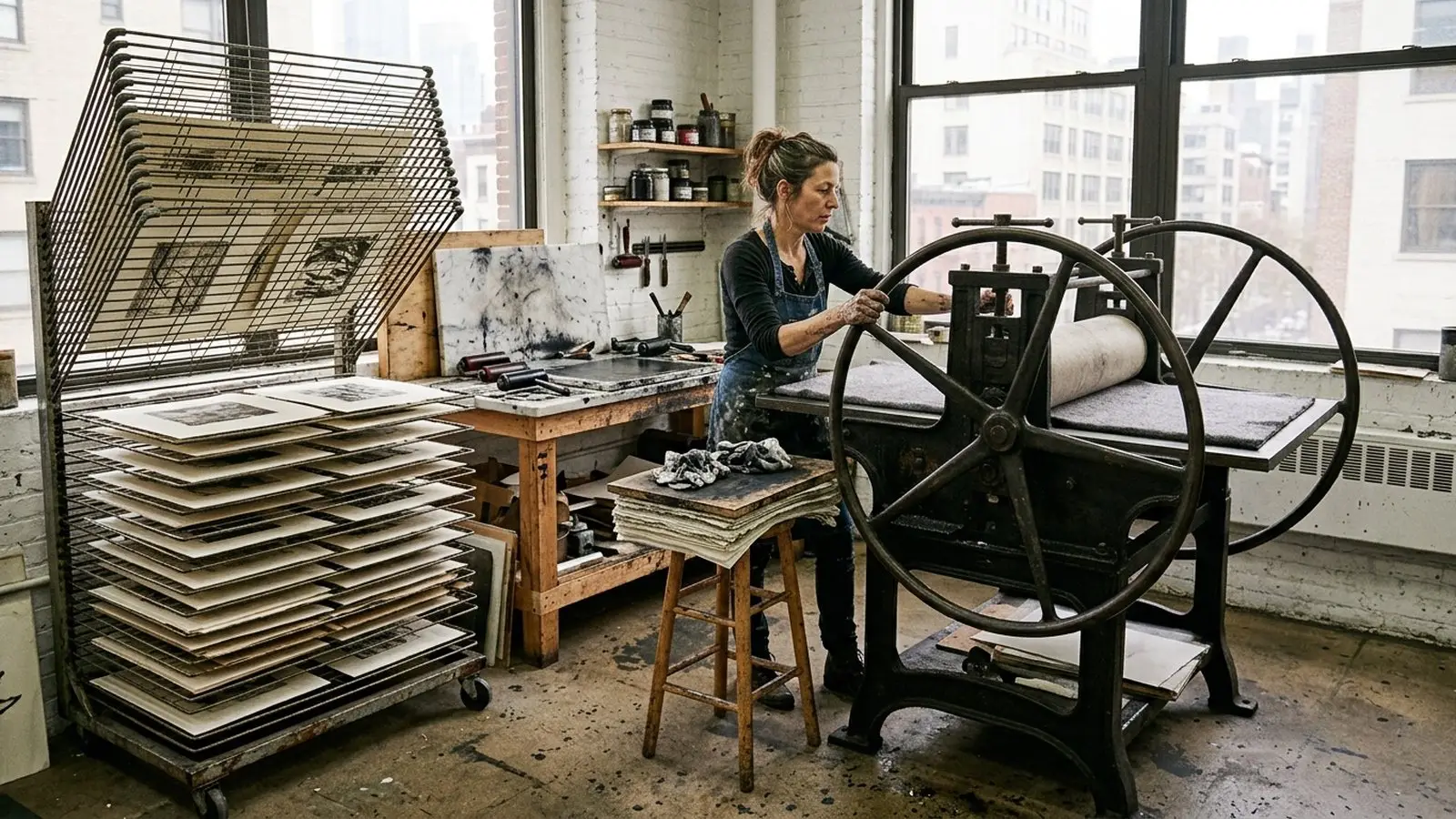
Print workshops and publishers sell signed, numbered editions made under the artist’s supervision. It is a real way to own work by someone whose unique pieces are out of range, as long as the edition size and the number are stated. An open edition with no fixed number is a reproduction, and it should be priced like one.
Art fairs
Fairs concentrate a lot of galleries into a few days. Useful for seeing range quickly, less useful for a first purchase, because the pace is fast, the pressure is real and the prices carry the cost of the booth.
Auctions
Auctions are a resale market. Prices are public, which is genuinely useful for research, but you pay a premium on top of the hammer price and the process rewards people who already know the market. Use auction records to learn what things sell for, not as your first way in.
How to compare the channels
When you are weighing one route against another, three questions separate them.
- How much information travels with the work? Studio and open studio: everything. Gallery: most of it. Online: as much as the seller chose to give.
- Who is between you and the artist, and what do they charge? Every layer is real work and real cost.
- Can you see it in person before you commit? If yes, most of the risk disappears.
For a first original piece, the studio wins on all three. It is also the only route where the person who made the work gets to tell you what it is about.
Sources
- Schönfeld, S., and Reinstaller, A. (2007). The effects of gallery and artist reputation on prices in the primary market for art: a note. Journal of Cultural Economics, 31(2), 143 to 153. doi:10.1007/s10824-007-9031-1
- Canals-Cerdá, J. J. (2012). The value of a good reputation online: an application to art auctions. Journal of Cultural Economics, 36(1), 67 to 85. doi:10.1007/s10824-011-9156-0
Start at the source
If you want original work and you want the artist to keep what you pay, start in a studio. Browse artist studios near you by neighborhood and medium, message any artist directly and ask to visit. Free to browse, free to message.