Learning how to buy art is less complicated than the art world makes it look. There is no license, no minimum budget and no required vocabulary. What there is, is a sequence of decisions, and most of the anxiety around buying comes from making them in the wrong order. This guide walks through that sequence from first look to the work on your wall.
If you have not bought anything yet, read our guide on how to start collecting art first. It covers the decisions that come before the purchase itself.
Step 1: decide what you want from the work
Before you look at a single piece, be honest about what you are buying for. Something to live with, something to mark an occasion, something to fill a specific wall, or something you hope will be worth more later. These lead to completely different purchases, and mixing them is how people end up disappointed.
If it helps, there is evidence that the artworks that move us most are doing something unusual in the brain. When people viewed images that they rated as intensely moving, activity appeared in the default mode network, a system normally associated with inward, self referential thought rather than with looking at the outside world (Vessel, Starr and Rubin, 2012, Frontiers in Human Neuroscience). The pieces that stop you are not a random reaction. They are touching something about you.
Step 2: set a budget before you look
Fix a number while you are still at home. It stops the conversation in the studio from being about money and lets it be about the work. Add roughly 20 percent on top for framing, transport and hanging, which almost everyone forgets. Our full guide on how much to spend on art goes through this in detail, including why treating art as an investment is a poor reason to stretch.
Step 3: know where art is actually sold
Each channel has a different price structure, a different amount of information and a different level of risk.
Directly from the artist
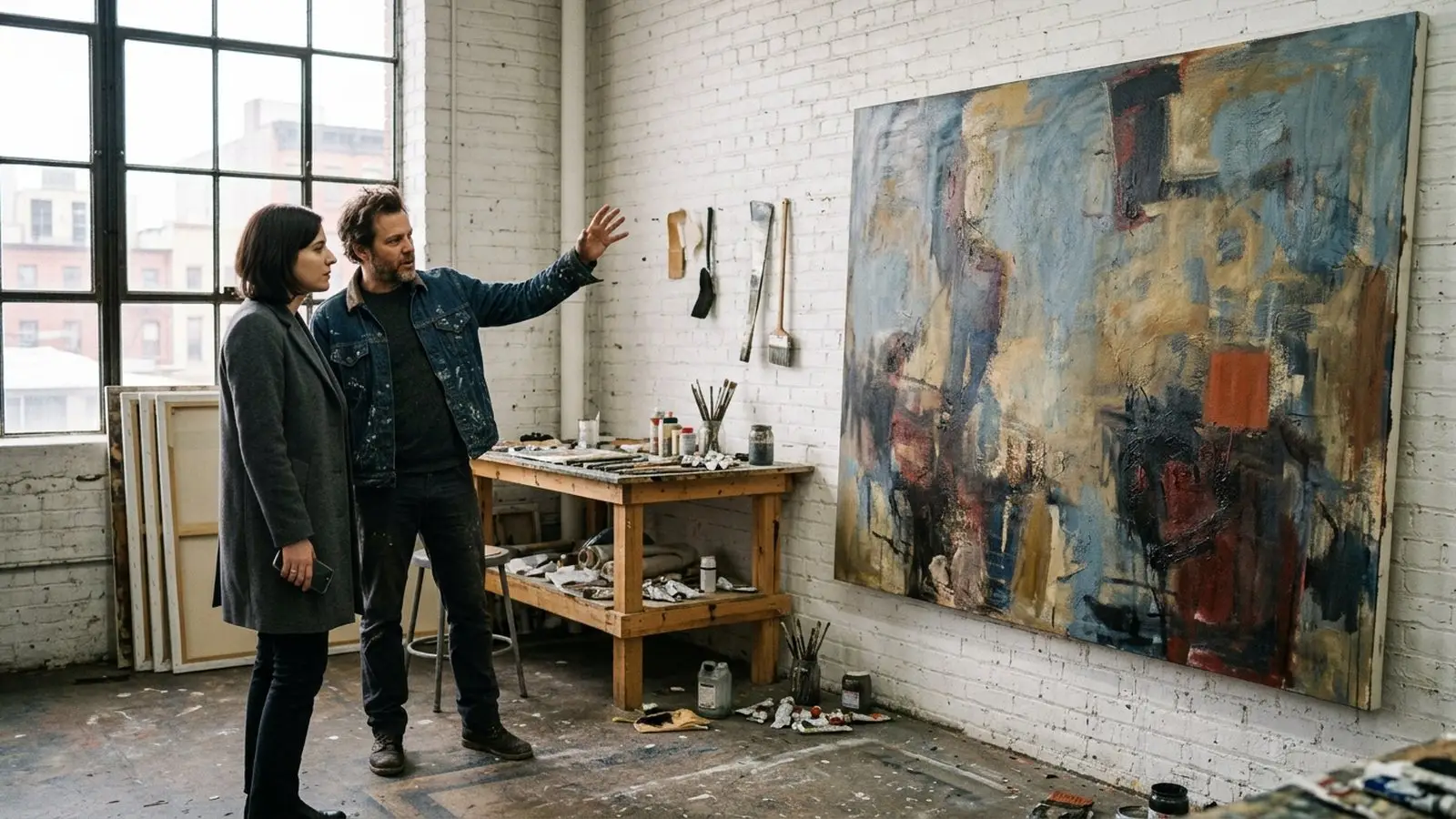
The studio is where you get the most information for the lowest price. You see the work in person, you see what else exists, and you can ask the person who made it anything you want. There is no gallery commission on top, so more of what you pay reaches the artist. The trade off is that you have to find the artist, which used to be the hard part.
Galleries
A gallery does real work: selecting artists, staging shows, building context and standing behind what it sells. You pay for that in the price, since commissions are typically a substantial share of the sale. If you want curation and a long relationship with a dealer, this is a good route.
Auctions
Auctions are a resale market. Prices are public, which is useful, but the buyer pays a premium on top of the hammer price and the process rewards people who already know the market. It is rarely the right first purchase.
Online marketplaces
Convenient, wide selection, and the place where the least information travels with the work. If you buy this way, read our guide on how to buy art online safely first.
Art fairs and open studio weekends
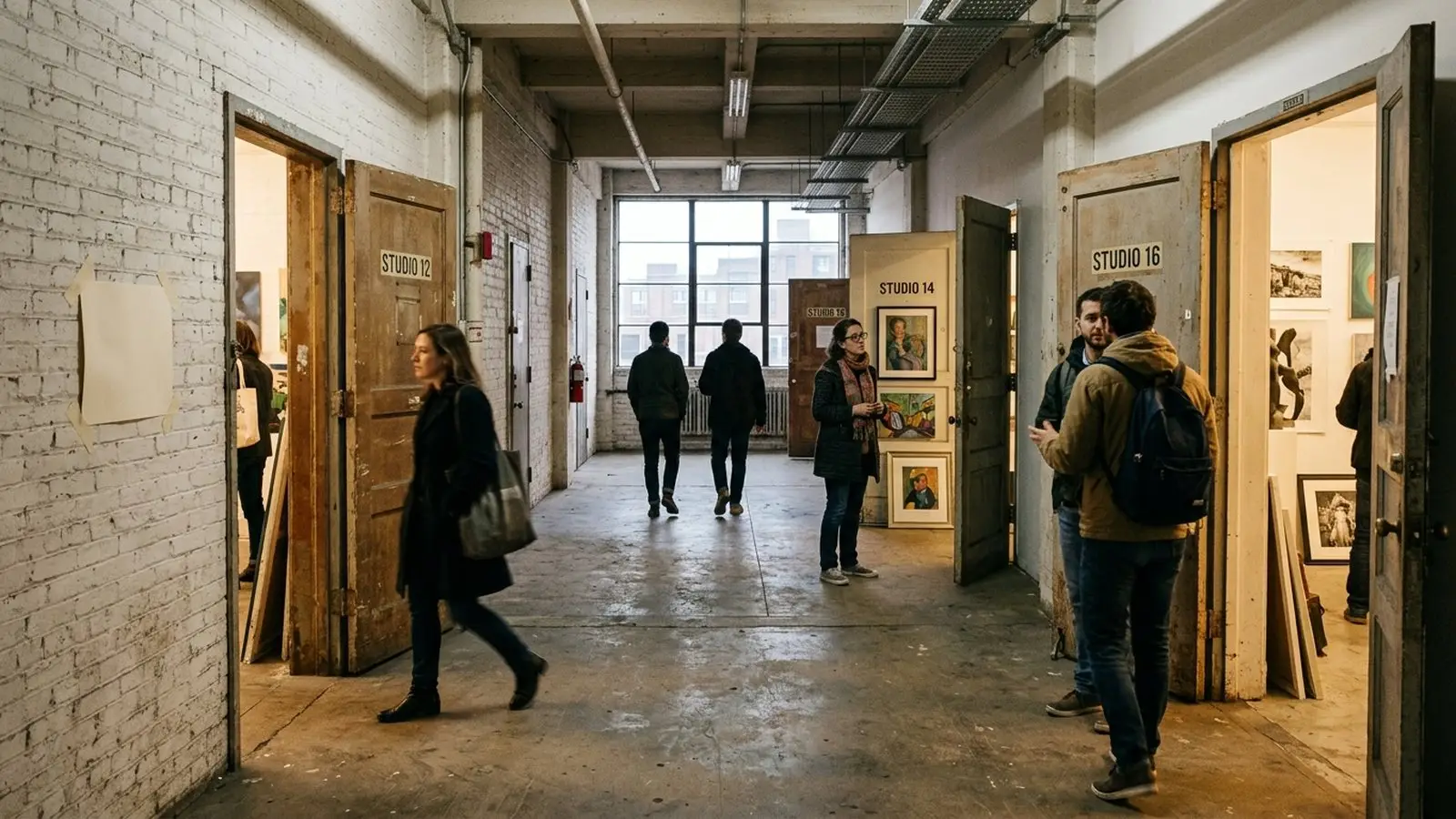
The most efficient way to see a lot of work in one day and meet the people who made it. Open studio weekends in particular are informal, free to attend and low pressure.
Step 4: learn to read a price
Prices in the primary market are not arbitrary. Research applying hedonic regression to more than a million auction transactions found that measurable attributes of a work and of its maker explain a large part of price variation, alongside broader market sentiment (Renneboog and Spaenjers, 2013, Management Science). In a studio, the same logic applies in a simpler form. The things that move a price are:
- Size. Larger works cost more, and not always proportionally.
- Medium. Oil on canvas is generally priced above works on paper, prints below both.
- Time and materials. A dense, worked surface represents weeks, not hours.
- Career stage. Exhibition history, collections and representation all move the number.
- Uniqueness. A one of a kind piece prices differently from an edition of fifty.
If a price surprises you in either direction, ask how it was set. Artists are used to the question and the answer tells you a lot.
Step 5: what to ask before you buy
- What is the title, year, medium and exact size?
- Is it unique, or part of an edition? If an edition, what number and how large?
- What surface is it on, and how should it be cared for?
- Is it framed, and is the frame included in the price?
- Has it been exhibited or published anywhere?
- What else exists in this series?
- Is the price negotiable, and is a payment plan possible?
None of these are rude. All of them are normal.
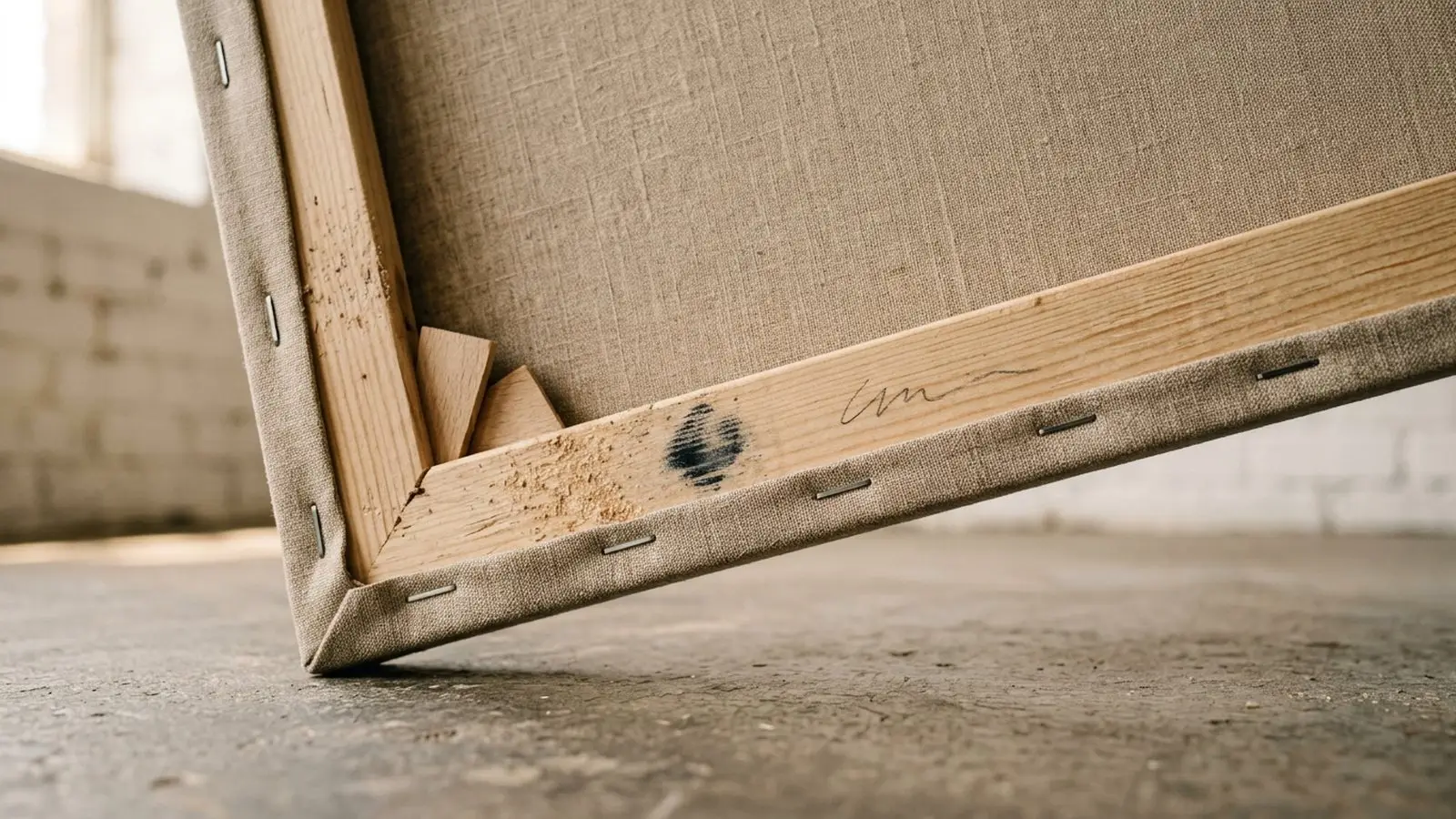
Step 6: the paperwork that matters
For contemporary work bought from a living artist, you do not need a thick file. You do need three things.
- An invoice with the artist name, title, year, medium, dimensions, price and date of sale.
- A certificate of authenticity signed by the artist, especially for editions and for anything unsigned on the front.
- Photographs of the work as received, including the back and any existing damage.
Keep all three together. If you ever insure, lend, resell or leave the work to someone, this is the entire provenance file and it takes five minutes to create at the point of sale.
Step 7: getting it home
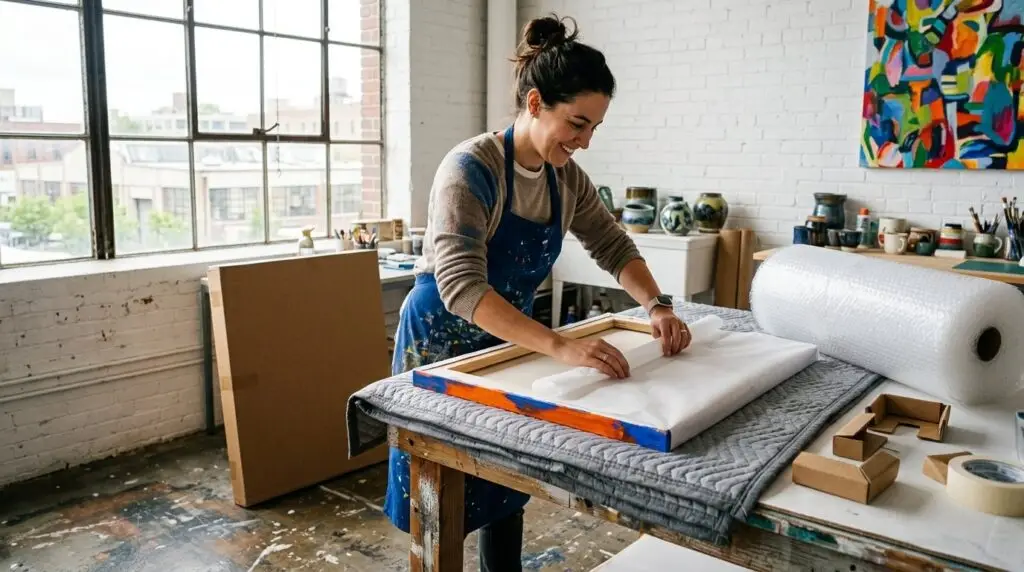
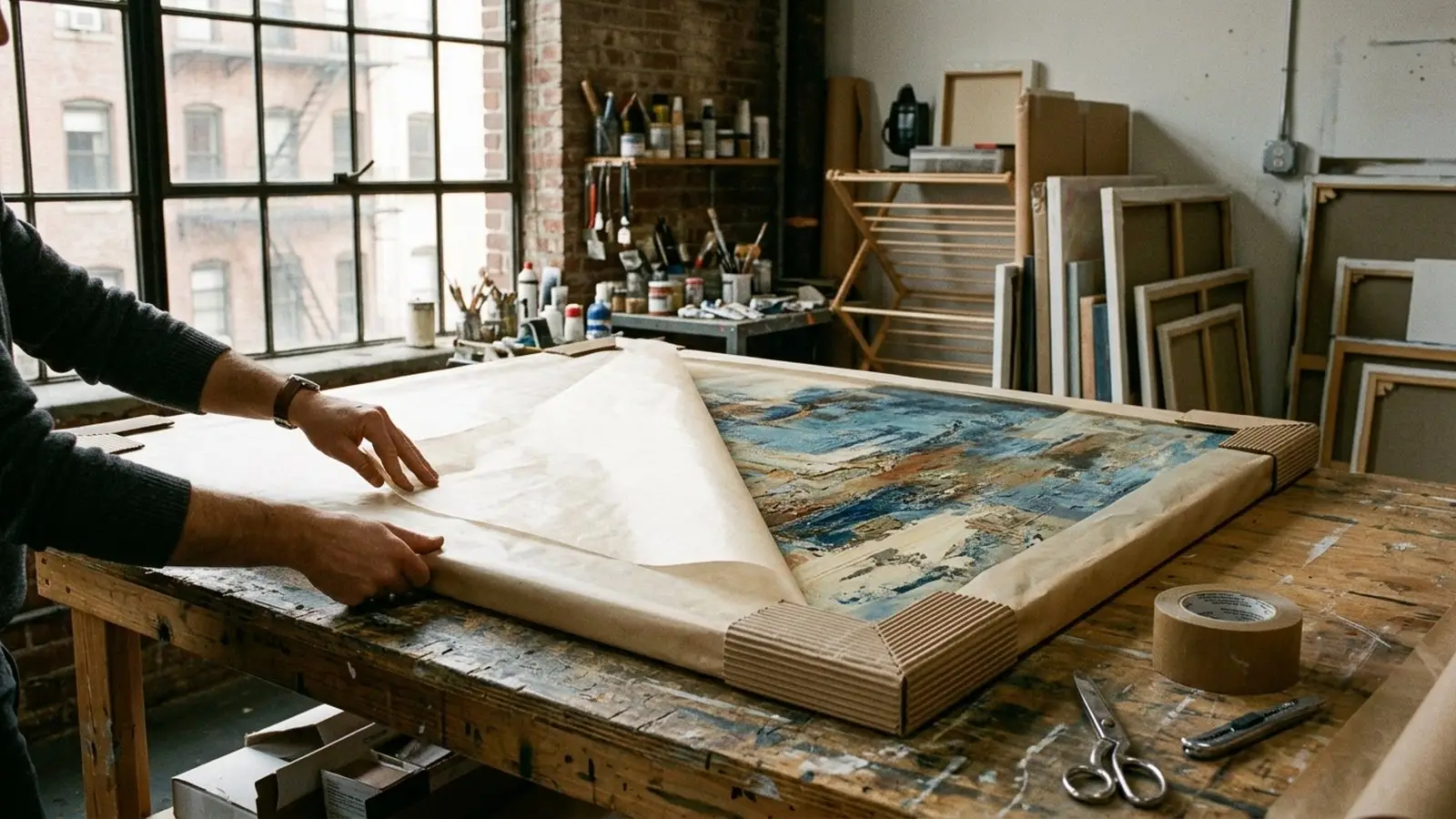
Small works travel flat, wrapped in glassine or acid free tissue, then bubble wrap, then a rigid box. Do not let bubble wrap touch a painted surface directly. Canvases travel face to face with a spacer between them, never rolled unless the artist says the work was made to be rolled. Anything under glass gets tape across the glass so a break does not slice the work. If you are shipping, ask the artist who they normally use, because they have done this before.
Step 8: living with it
Hang work out of direct sunlight, away from radiators and away from bathrooms and kitchens where humidity swings. Center the piece at roughly eye level, around 57 to 60 inches from the floor to the middle of the work, and lower it if you mostly view the room seated. Use fixings rated well above the actual weight. Then leave it alone and look at it for a year before deciding whether it was the right choice.
Six mistakes worth avoiding
- Buying the first thing you see. See twenty pieces before you buy one.
- Buying to match a sofa. Furniture changes faster than art does.
- Buying under time pressure. Real scarcity exists, manufactured urgency is a signal to walk.
- Buying for resale value. See the numbers in our budgeting guide.
- Skipping the paperwork. Five minutes now, hours later.
- Not asking questions. The only expensive question is the one you did not ask.
Originals, editions and prints
One distinction confuses more first time buyers than any other, and it changes the price by an order of magnitude. An original is a unique object made by hand. A limited edition is a set number of copies, usually numbered as 3 of 25, produced under the artist’s supervision and normally signed. An open edition print has no fixed number and can be reproduced indefinitely. A reproduction is a photographic copy of an original work.
None of these is dishonest, and editions are how many artists make their work reachable. The problem only appears when a listing is vague. If a description says print without saying which kind, ask. If it says limited edition without a number, ask for the number and the edition size. If the answer is unclear, treat the work as an open edition and price it accordingly in your head.
Commissioning a work
If you love an artist’s hand but not the piece in front of you, ask whether they take commissions. A commission is a different kind of purchase and it works best with clear terms agreed in writing before anyone starts: subject, size, medium, palette, deadline, price, deposit, and what happens if you do not like the result. A deposit of around half is normal and it protects both sides. Expect to give the artist real freedom inside the brief. The reason you approached them is their judgment, and a commission that specifies every decision usually produces a weaker work than the one that drew you in.
Negotiating without being rude
Asking about price is normal in a studio. Asking for a large discount because you are buying your first piece is not. What works: ask whether the price is flexible, ask whether a payment plan is possible, ask whether there is a smaller work in the same series, or ask what the price would be for two pieces. What does not work: comparing the artist unfavorably to someone cheaper, or treating the number as an opening bid. Most artists have thought about their prices more carefully than you would expect, and the ones who have not will tell you.
Building a collection instead of buying one piece
A collection is not a shopping list, it is a record of what you paid attention to. The people who end up with collections they love tend to do the same few things. They buy from artists whose work they can follow over time rather than one off purchases from strangers. They revisit the same studios a year later and see what changed. They buy the piece that unsettles them slightly rather than the safe one. And they keep a simple document, a spreadsheet or a folder, with an invoice, a photograph and a note about why they bought it. In ten years that note will be the part you value most.
You do not need a theme, a period or a medium to start. Consistency shows up on its own after four or five purchases, and it is usually not the thing you would have predicted.
A short answer to four common questions
- Do I need to know about art history to buy art? No. It makes conversations richer, but it is not a requirement and it is not what makes a purchase good.
- Is it rude to visit a studio without buying? No. Artists want visitors. Most sales happen on a second or third visit, not the first.
- Should I buy framed or unframed? Unframed is usually cheaper and lets you choose a frame that suits your space, unless the artist considers the frame part of the work.
- What if my taste changes? It will. That is not a failure. A collection that shows how you changed is more interesting than one that does not.
Sources
- Vessel, E. A., Starr, G. G., and Rubin, N. (2012). The brain on art: intense aesthetic experience activates the default mode network. Frontiers in Human Neuroscience, 6:66. doi:10.3389/fnhum.2012.00066
- Renneboog, L., and Spaenjers, C. (2013). Buying beauty: on prices and returns in the art market. Management Science, 59(1), 36 to 53. doi:10.1287/mnsc.1120.1580
Start in a studio
Everything above gets easier once you are standing in front of real work with the person who made it. Browse artist studios by neighborhood and medium, message any artist directly, and arrange a visit. Free to browse, free to message, and whatever you buy, the artist keeps.