You can buy art online with very little risk, but the risk that exists is a specific one: online, almost all the information about a work stays with the seller. You are looking at a photograph and a description, not at a surface. This guide covers what to check before you buy art online, what protects you, and the signals that are worth walking away from.
Buying online is one route among several. Our guide on how to start collecting art covers the other channels and the decisions that come first.
The real problem is information, not fraud
Outright fakes get the headlines, but the everyday problem in online markets is asymmetric information: the seller knows things about the item that the buyer cannot verify, which distorts prices and makes cautious buyers bid low or not at all. Economists surveying internet auction research identified this, together with the winner’s curse it produces, as one of the central features of these markets, and identified reputation systems as the main mechanism built to counter it (Bajari and Hortaçsu, 2004, Journal of Economic Literature).
That mechanism measurably works in the art market specifically. An analysis of art auctions on eBay found that negative seller feedback was associated with significantly fewer bidders, a lower probability of sale and a significantly lower sale price, while additional positive feedback for already established sellers made no statistically significant difference (Canals-Cerdá, 2012, Journal of Cultural Economics).
The practical translation: a long clean record is worth something, a bad record is worth a lot of caution, and a brand new seller with a perfect score tells you almost nothing.
What to check before you pay
- Who you are actually buying from. A named artist with a body of work and a traceable history is a different proposition from an anonymous storefront.
- Additional photographs on request. Ask for the full work in daylight, a detail of the surface, the edges, the back, the signature and something next to it for scale. A real seller sends these within a day.
- The exact specification. Title, year, medium, support, dimensions without the frame, and whether it is unique or an edition.
- Condition, stated in writing. Any damage, repair, warping or discoloration.
- What is included. Frame, certificate of authenticity, signed invoice.
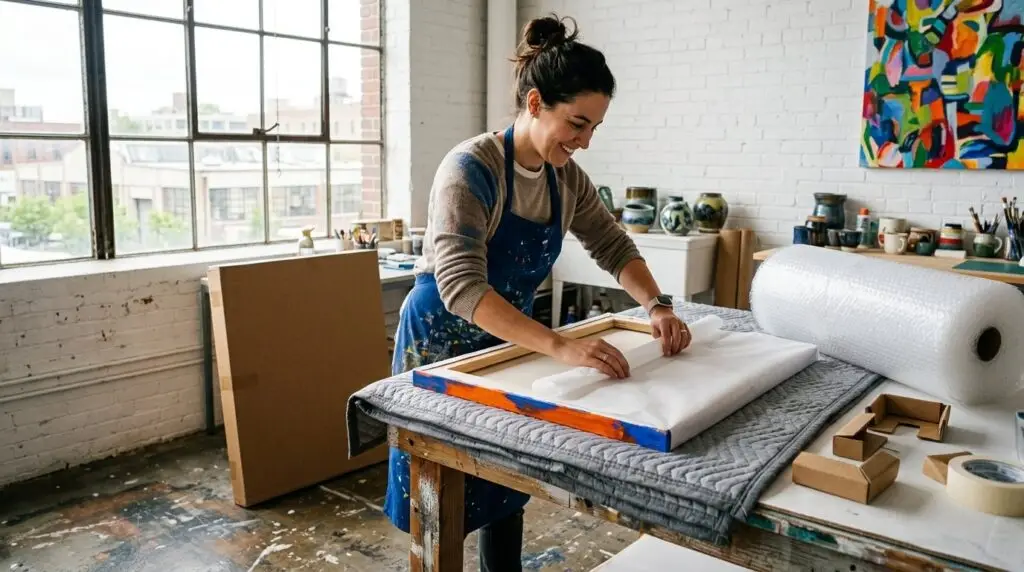
- Shipping and who carries the risk. Packing method, carrier, insurance, and who pays if it arrives damaged.
- The return policy. In writing, with a window that starts on delivery.
Pay in a way that can be reversed
Use a payment method with buyer protection. Credit cards and established payment platforms let you dispute a charge if what arrives is not what was described. Bank transfers, wire transfers, gift cards, cryptocurrency and payment apps meant for friends and family offer you no route back. A seller who will only accept an irreversible method is telling you something.
Keep the whole conversation on a platform that logs it, or in email. Screenshots of a chat that later disappears are worth much less than an email thread.
Warning signs
- Pressure to decide today, or a claim that someone else is about to buy it.
- Refusal to send extra photographs, or photos that are clearly taken from a catalog rather than from the actual work.
- A price far below anything comparable, with a story explaining why.
- A request to move the payment off platform to save fees.
- No physical address, no phone number and no other trace of the seller anywhere.
- A description that avoids naming the medium, the size or whether the work is an original or a print.
When it arrives
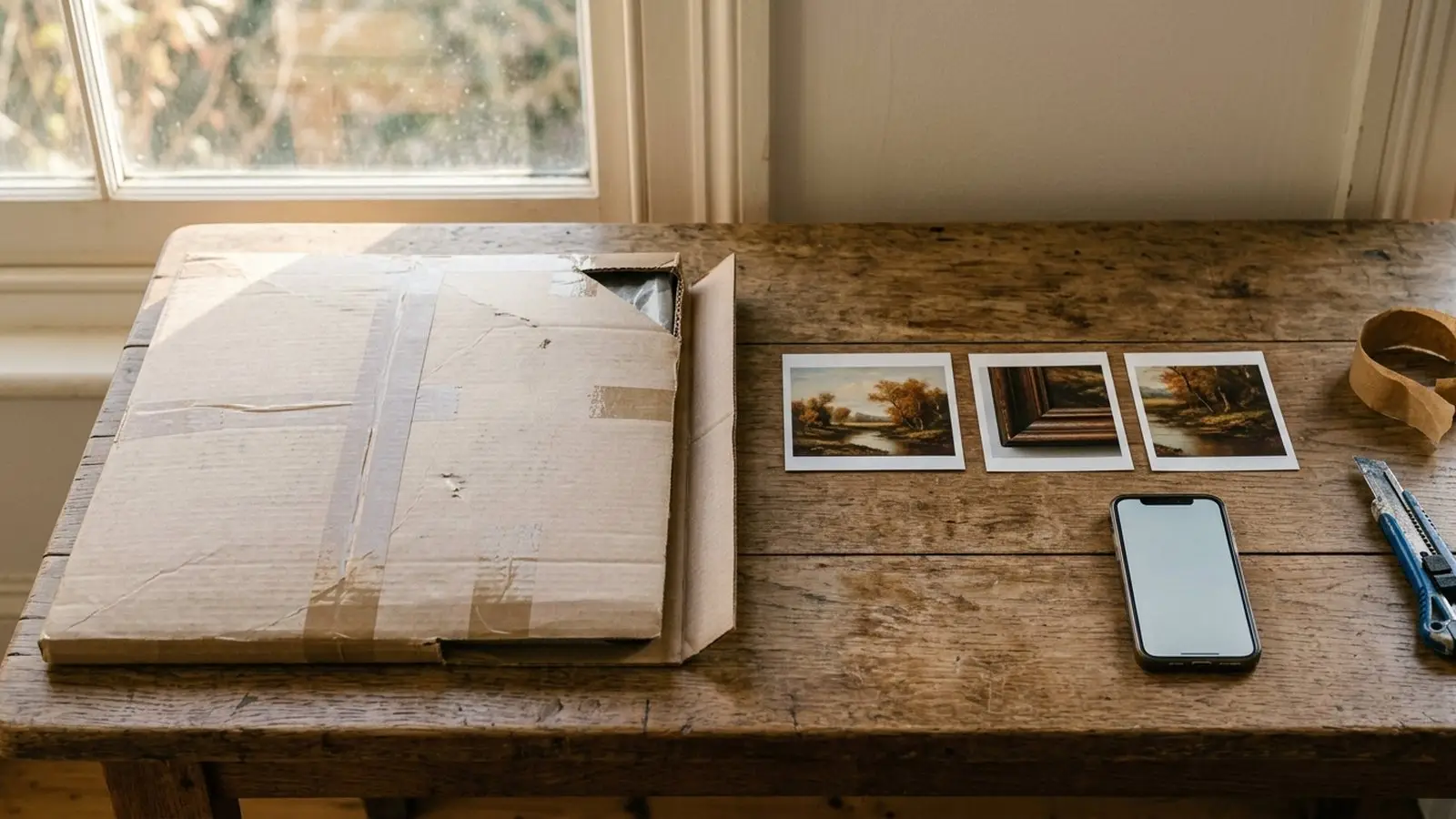
Photograph the packaging before you open it, then photograph the work from the front and the back before you do anything else. Compare it against the listing: size, medium, color, condition, signature. If something is wrong, say so immediately and in writing, within the return window. Most disputes are lost on timing rather than on merit.
The lowest risk way to buy online
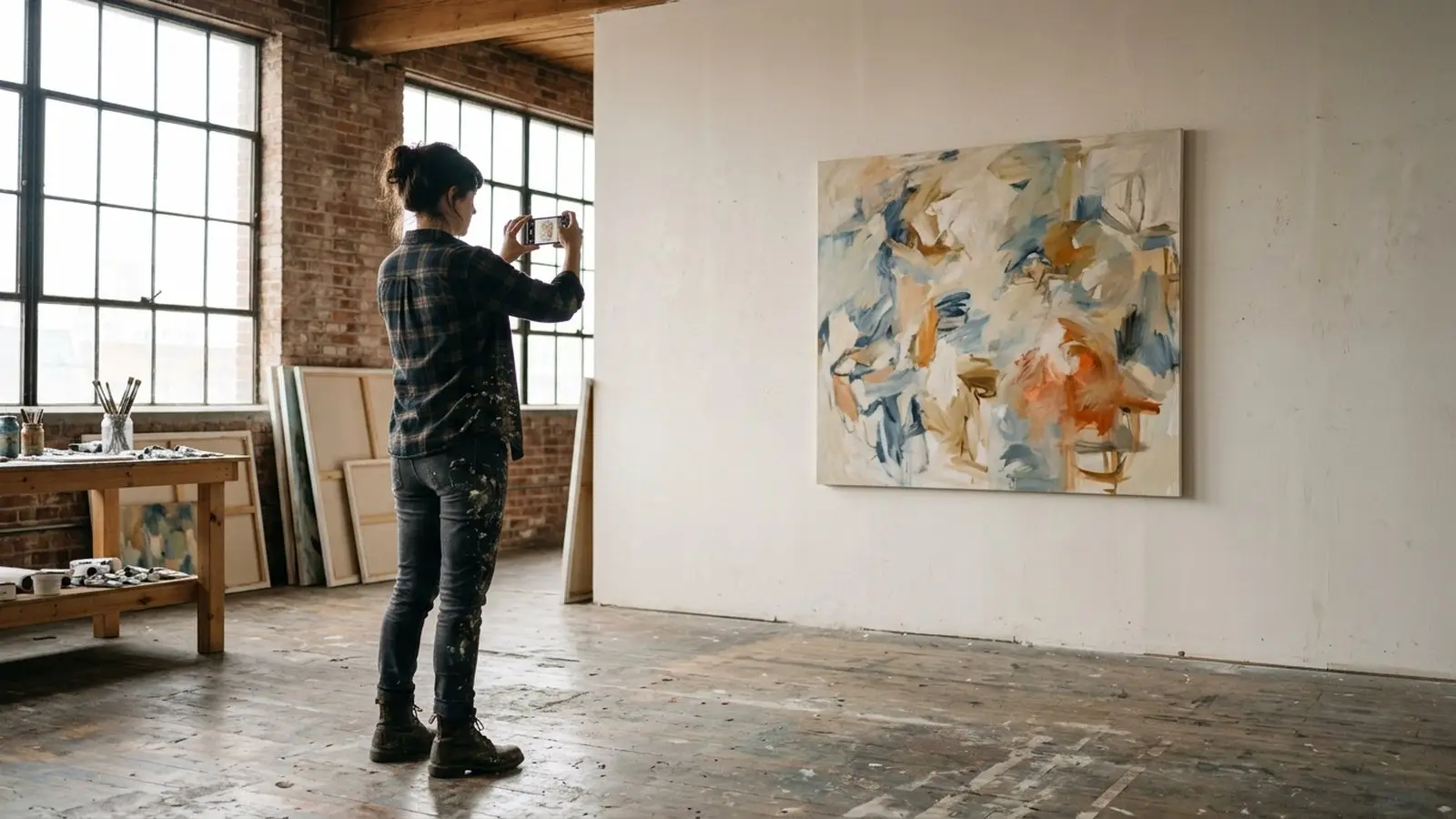
Buy from the artist. When the person listing the work is the person who made it, the information gap largely closes: they can answer any question about materials, process and condition, they have a reputation attached to their own name rather than to a disposable account, and there is no chain of previous owners to verify. You can also ask to visit the studio and see the work in person before you commit, which removes the problem entirely.
If you are still deciding what to look for, read how to choose art you will love, and our full guide on how to buy art covers pricing, paperwork and transport in more depth.
Buying from an online gallery or marketplace
Platforms sit between you and the seller, and how much they actually stand behind a sale varies enormously. Before you buy, find the answers to three questions on the site itself rather than in the listing. Does the platform vet the sellers or does anyone list. Does it hold your payment until you confirm the work arrived as described. And what is its own return window, separate from whatever the seller promises. A platform that does all three is worth a higher price than one that does none.
Prints, editions and what you are really getting
Online is where the line between an original and a reproduction blurs most often, because both photograph identically. A listing should state whether the work is unique, part of a limited edition with a number and an edition size, or an open edition. If it says print with nothing else, assume it is a reproduction until the seller says otherwise in writing. This one question changes what the piece is worth more than anything else on the page.
Keep a record from the first message
Save the listing as a PDF or screenshot before you pay, including the price, the description and the photographs. Save the invoice, the certificate if there is one, and the shipping confirmation. If a dispute ever happens, the case is decided on what was described at the moment of sale, and listings can be edited afterwards. This takes two minutes and it is the difference between a refund and a lesson.
Sources
- Bajari, P., and Hortaçsu, A. (2004). Economic insights from internet auctions. Journal of Economic Literature, 42(2), 457 to 486. doi:10.1257/0022051041409075
- Canals-Cerdá, J. J. (2012). The value of a good reputation online: an application to art auctions. Journal of Cultural Economics, 36(1), 67 to 85. doi:10.1007/s10824-011-9156-0
See it before you buy it
The safest online purchase is the one you have already seen in person. Browse artist studios near you, message the artist directly and ask to visit. Free to browse, free to message.