Nobody is coming to see a gallery. They are coming to see the place the work is made in, which means the paint on the floor and the failed canvas against the wall are not things to hide. They are the reason for the visit. What you do need to fix is everything that makes a visitor uncomfortable or lost, and that is a much shorter list than most artists think.
Work through this in three passes: two weeks out, the day before, and the hour before.
Two weeks before
1. Decide what they will actually look at
Pick ten to fifteen pieces, not everything you own. One wall becomes the main wall and gets your strongest work at eye height, with real space around each piece. Everything else can lean, stack or hang as it normally does.
Fifteen works that can breathe beat forty crammed together. If someone can see the whole room in one glance, they stop looking.
2. Leave the work in progress exactly where it is
The half finished canvas, the studies pinned up with tape, the version you gave up on. Leave all of it. This is the single biggest difference between your studio and a shop, and it is what people remember afterwards. Do not tidy your process away.
3. Write your price list
Every piece that is for sale, with a price, on one sheet of paper. You do not have to hang it. You do have to have it, because the alternative is doing arithmetic in your head while someone watches you.
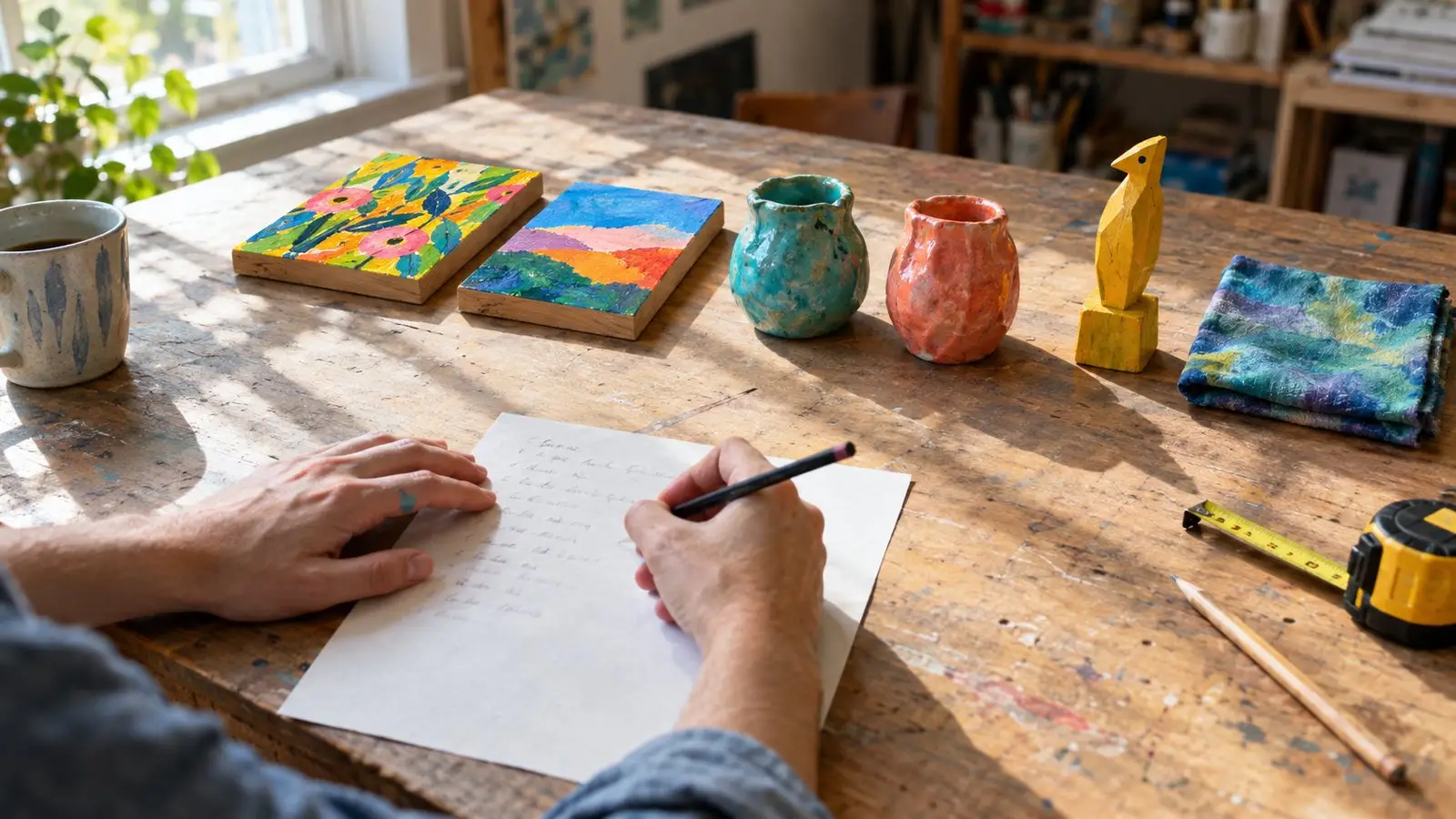
Mark clearly which pieces are not for sale. “That one is not for sale” is a perfectly good sentence and it does not cost you anything.
The day before
4. Clear a path and a spot to stand
Someone should be able to walk from the door to the main wall without stepping over anything, and stand two or three metres back from the work. That distance matters more than anything else in this list. Move the table if you have to.
5. Move what you do not want touched or seen
- Anything valuable that is not the work
- Post, bank letters, anything with your address or a name on it
- Solvents, blades and open jars, at least out of arm’s reach
- Work you are not ready to show at all
- The cat, if the cat is a problem
6. Light
Daylight is your friend, so plan visits when the room gets it. If you are relying on lamps, check the wall in the evening the day before, not five minutes before someone knocks. A single warm bulb aimed at a wall of grey paintings will make them look muddy and you will not notice until it is too late.

7. Sort out the way in
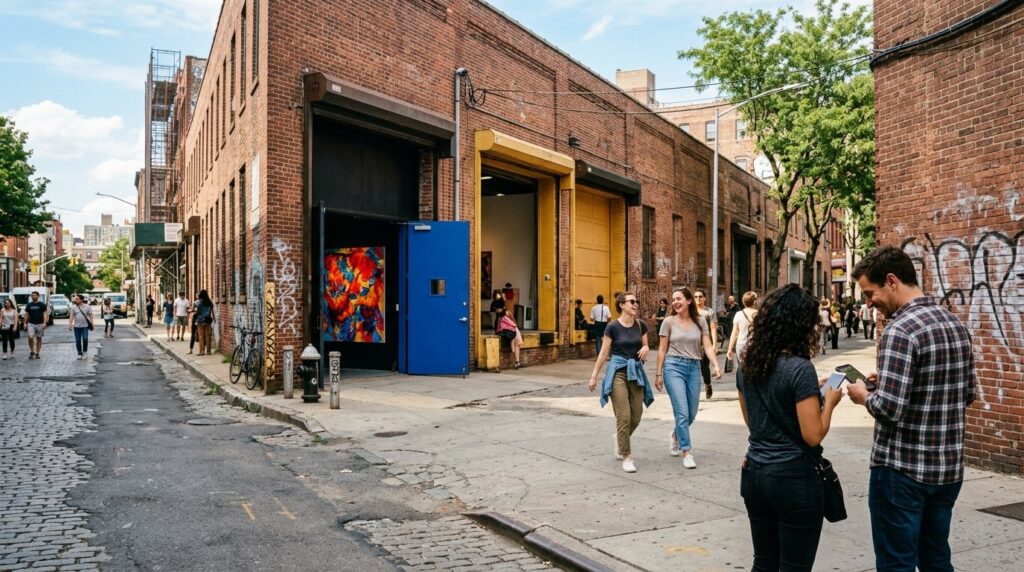
This is where most visits go wrong. Studios are in industrial buildings with unmarked doors and broken buzzers, and your visitor is standing outside with a phone in their hand feeling stupid.
- Which street door, and what does it look like
- Does the buzzer work, and which button
- Which floor, and is there a lift
- A sheet of paper with HEYATELIER and your name on the door costs nothing
Send this in a message the day before, in plain sentences. Not “second floor” but “the green metal door next to the laundrette, buzzer 4, we are two flights up on the left”.
The hour before
8. The boring hospitality things
- Somewhere to sit. Two chairs is enough. People stay longer when they can sit down, and longer visits sell more work.
- Water. Coffee if you have it. Nothing more than that.
- Somewhere to put a coat and a bag that is not the floor.
- Know where the nearest toilet is, even if it is down the hall.
9. Have three sentences ready
Not a speech. Three sentences you can say when someone walks in and there is a silence:
- What you are working on right now, in one line.
- What the work on the main wall has in common.
- One question back to them. “Is there anything you came here for in particular?” works every time.
Say them out loud once, in the room, before anyone arrives. It feels ridiculous and it works.
10. Last look
Stand in the doorway and look at the room the way a stranger would. Anything that makes you wince, deal with it. Anything that just makes you self conscious, leave it. Those are two different feelings and only the first one is worth acting on.
The short version
- Ten to fifteen works, one main wall, room to step back
- Work in progress stays visible
- Price list on paper, in your pocket
- Valuables and personal post out of sight
- Daylight checked at the right hour
- Door, buzzer and floor written out and sent the day before
- Two chairs, water, somewhere for coats
- Three sentences ready