How to Get Your Art Noticed by Collectors
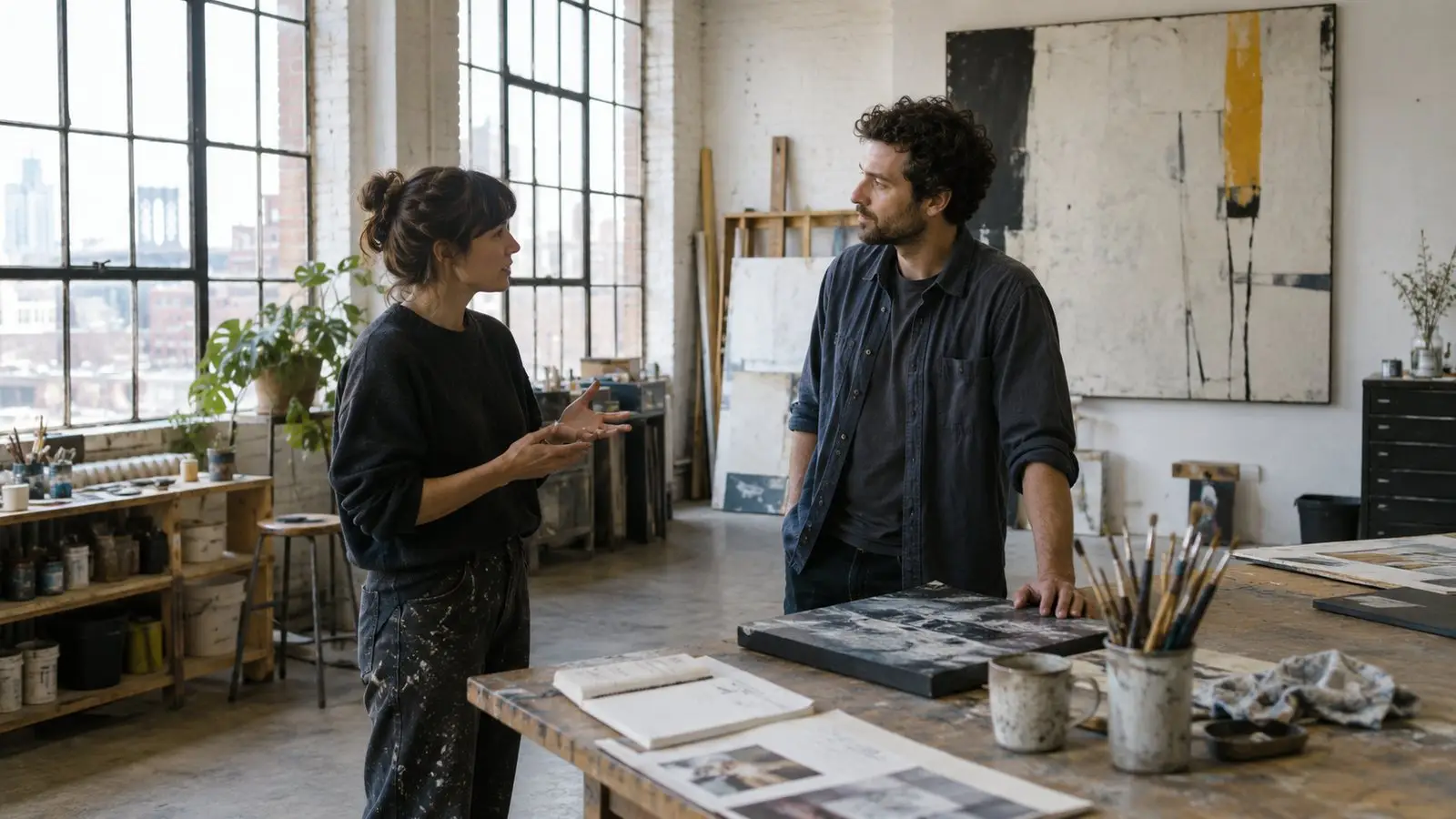
You make the work. You post it. You wait. And almost nothing happens. A few likes from other artists, the occasional compliment from a friend, but no collectors asking about prices.
It is one of the most frustrating parts of being an artist: the work is good, but the people who would buy it never see it. The problem is rarely the art. It is that collectors look in specific places, and most artists are not visible there in a way that makes it easy to take the next step.
This guide covers where collectors actually look, and the handful of things that turn you from invisible to easy to find, easy to trust and easy to contact. It builds on our guide on how to sell art without a gallery.
Understand how collectors find artists
Most collectors do not stumble onto artists at random. They find them through a few routes, again and again:
- **Search.** Someone types “artist studios near me,” “abstract painter Brooklyn” or “buy original art directly from artist” into Google.
- **Recommendations.** A friend, another artist or another collector mentions a name.
- **Events.** Open studios, group shows, art school exhibitions and fairs.
- **Social media.** Usually as a second step: they hear about you somewhere, then look you up.
- **Directories and platforms** built for discovering artists.
Notice what these have in common. In almost every case, the collector ends up looking for more information about you. Whether they find a clear, convincing place to land decides whether they ever contact you.
Have one home base
The single most important thing you can do is have one place that shows a collector everything they need: your work, who you are, roughly what it costs and how to reach you. Send everyone there, from every channel.
That place should include:
- **Your best work,** not all of it. Six to ten strong, recent pieces say more than fifty mixed ones.
- **A short bio** in plain language: what you make, what drives it, where you work.
- **A price range,** so collectors can tell whether you are within reach.
- **Where you are,** at least your neighborhood or city.
- **A clear way to contact you,** ideally a direct message button rather than a hidden email address.
A free studio profile on HEYATELIER is built to do exactly this, and it is indexed by Google, so collectors searching for artists in your area can find it.
Make your work look as good online as it does in person
Collectors judge work from photos before they ever see it in person. Blurry, crooked or color-shifted images lose sales before a conversation can start. Good photos do not require expensive gear, just daylight, a straight angle and some care. Our handbook guide on which photos to upload walks you through it.
Include at least one photo that shows scale: the work on a wall, next to a chair or in your hands. Size is one of the hardest things to judge online.
Be specific about what you make
“Artist” is not searchable. “Large-scale abstract oil paintings,” “botanical linocuts” or “functional stoneware” is. Collectors often look for a particular medium, subject or style. Use those words in your bio, your titles and your descriptions.
The same goes for location. If you work in a particular neighborhood or studio building, say so. Local collectors often search exactly that way.
Show up in person
Online visibility gets you found. In-person contact gets you remembered.
- **Open your studio.** Even a single afternoon, announced to friends, neighbors and your mailing list, can bring in people who would never have found you online. Our guide on setting your open studio days explains how.
- **Join group events.** Open studio weekends, building-wide events and local art walks bring collectors to you.
- **Go to other artists’ openings.** Collectors are there, and so are artists who might recommend you.
- **Carry something.** A simple card with your name, medium and where to find your work online.
Make it easy to take the next step
Many artists lose collectors at the last moment because the next step is unclear. Remove every bit of friction:
- **Show prices or a range.** “Price on request” stops many first-time buyers from ever asking.
- **Answer messages quickly.** A reply within a day keeps interest alive. Our guide on replying to your first message has templates.
- **Invite visits.** Saying “studio visits welcome by appointment” turns curiosity into a concrete plan.
- **Know how you will take payment** before anyone asks.
Let other people talk about you
Recommendations are the most powerful discovery channel there is, and the slowest to build. Help it along:
- **Stay in touch with everyone who has bought from you** or visited your studio.
- **Ask happy collectors** whether they would mention you to friends.
- **Build relationships with other artists.** They are the people most likely to recommend you.
- **Collect email addresses** at every event. A simple list of people who like your work is worth more than thousands of followers.
Common questions
**Do I need a big following on Instagram?** No. Many artists sell steadily with a small, engaged audience. Social media works best as a way to stay in touch with people who already know you, not as your only way to be found.
**Should I show prices publicly?** Showing at least a range is one of the easiest ways to increase inquiries. It lets collectors know they can afford you before they reach out.
**How long does it take?** Being found is a slow build. Expect months, not weeks. The artists who succeed are usually the ones who keep showing up consistently.
Make it easy to find you
You do not need to be everywhere. You need to be clear, findable and easy to contact in the places collectors actually look.
Create your free studio profile and give collectors one place to see your work, learn who you are and message you directly.
More from the blog
There is no single test for good art, but there are qualities you can learn to see. Five questions that sharpen your jud...
Original, original print, limited edition, giclée, poster. What each term actually means, how to tell them apart in pers...
Every sale through a middleman costs you a share. What galleries and marketplaces actually take, what selling commission...
One email a month. The new post, and nothing else.
New writing, open studio dates, and the date of the first HEYATELIER Weekend in New York. Unsubscribe in one click.
You confirm by email. We never share your address.