Commission-Free Art Sales: How to Keep What You Earn
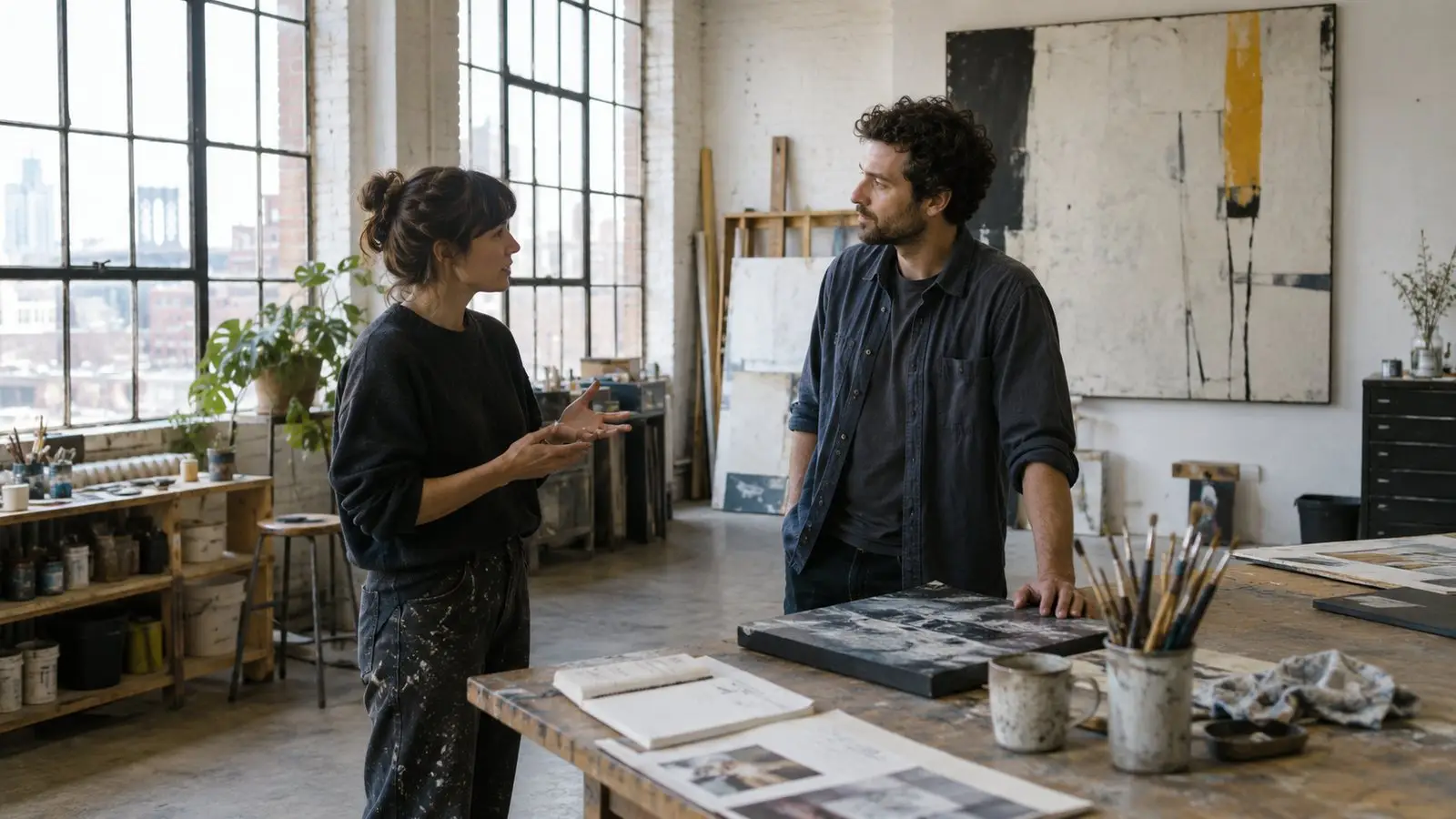
You finish a painting, price it at $1,200 and it sells. Then the deductions start. Depending on where it sold, you might take home $600, $720 or a little over $1,000. Same painting, same buyer, very different month for you.
Commission is the quiet cost in most art careers. It rarely shows up as a bill. It just makes every sale smaller than it looks. This guide covers what the main channels actually take, what selling commission-free really involves, and how to set it up so more of each sale stays with you. For the bigger picture on going independent, start with our guide on how to sell art without a gallery.
What each channel takes
Here is roughly what common routes cost an artist on a sale of an original work. Exact terms vary and change, so always check the current agreement before you sign.
- **Gallery representation:** commonly around half of the sale price. In return the gallery provides space, shows, promotion, its collector list and its reputation.
- **Curated online galleries:** Saatchi Art, for example, takes 40 percent on originals.
- **General marketplaces:** Etsy charges a 6.5 percent transaction fee plus payment processing and listing fees, which comes to roughly 10 percent on a typical US order, and more if a sale comes through its offsite ads.
- **Selling direct:** no commission. You pay for payment processing if you take cards, and you do the work the middleman would have done.
None of these is wrong. A gallery that sells your work consistently can be worth every percent. The point is to know what you are paying for, so you can decide where each sale should happen.
The math on one painting
Take that same $1,200 painting:
- Through a gallery at 50 percent: you keep $600.
- Through a curated online gallery at 40 percent: you keep $720.
- Through a marketplace at around 10 percent: you keep about $1,080.
- Sold direct, paid by card at around 3 percent: you keep about $1,165.
Over ten sales a year, the gap between the first and last line is more than $5,000. For many emerging artists that is the difference between art paying for itself and art paying for materials only.
What commission-free really means
Selling commission-free does not mean selling for free. It means you swap a percentage for effort. The work a gallery or platform does for its cut still has to happen. You just do it yourself, or set up simple systems that do it for you.
That work comes down to four jobs:
- **Being found.** Someone has to put your work in front of people who might buy it.
- **Being trusted.** A buyer needs to feel safe paying a stranger for something valuable.
- **Closing the sale.** Price, payment, paperwork and a clear answer to “how does this work?”
- **Delivering.** Packing, shipping or handing the work over, and making the buyer feel good about it.
Each one is manageable. None of them requires a gallery, a big following or a custom website.
How to set yourself up to sell direct
Have one place that does the job of a gallery wall
Collectors want to see a body of work, a short bio, prices or price ranges, and a way to reach you. Put all of that in one place you control, and send everyone there. A studio profile on HEYATELIER does this for free, with no commission on anything you sell.
Make your prices visible
Hidden prices create friction. “Price on request” makes many buyers feel like they are being sized up, so they never ask. Showing at least a range (“works on paper from $300, paintings from $900”) lets people qualify themselves before they message you.
Decide how you take payment before anyone asks
When a collector says yes, the worst answer is “let me figure that out.” Pick your method in advance: a payment link from a card processor, a bank transfer or an invoice. Card processing usually costs around 3 percent, which is a small price for making it easy to say yes. Our handbook piece on payment, packing and delivery walks through the options.
Put the basics in writing
A short sales confirmation protects you and reassures the buyer. Include the title, medium, size, year, price, what is included (framing, shipping), payment terms and when the work will be delivered. One page is enough.
Invite people in
The fastest way to build trust is to let people see where the work is made. A studio visit answers questions a website cannot: how big it really is, what the surface looks like, who made it. Someone who has stood in front of your work and talked to you about it is a very different buyer from someone scrolling past a thumbnail, and they tend to come back.
What you give up, honestly
Selling direct is not for every sale or every artist. You give up the reach of a gallery’s collector list, the credibility of its name and the time you would have spent in the studio instead of answering messages. Many artists mix both: a gallery for some bodies of work, direct sales for the rest. If you are weighing representation, keep your own direct channel open either way. It is the one relationship with collectors that nobody can take away from you.
Common questions
**Is it unprofessional to sell without a middleman?** No. Many established artists sell directly from their studios alongside or instead of gallery sales. Professionalism comes from clear prices, clear terms and reliable delivery, not from who takes the payment.
**Should my direct prices be lower than gallery prices?** Keep them the same. If you work with a gallery, undercutting its prices damages that relationship and teaches collectors to skip the gallery. If you do not, consistent prices protect the value of every work you have already sold.
**Do I need a business license or sales tax setup?** That depends on where you live and how much you sell. Check your state and city rules, and talk to an accountant once sales become regular.
**What about scams?** Be wary of buyers who want to overpay, pay with checks, or use their own shipper. Take payment before the work leaves your studio, through a method you chose.
Keep what you earn
Commission-free selling is a set of small, repeatable habits: one clear place for your work, visible prices, a payment method ready to go and an open door. Get those in place and every sale you make is worth what you priced it at.
Create your free studio profile and let collectors find you, message you and visit you directly. No commission on what you sell.
More from the blog
Original, original print, limited edition, giclée, poster. What each term actually means, how to tell them apart in pers...
You don't need an art history degree to understand art. A practical method for looking at any work, what research says a...
A timeline: three weeks before, one week before, the day itself, and the day after.
One email a month. The new post, and nothing else.
New writing, open studio dates, and the date of the first HEYATELIER Weekend in New York. Unsubscribe in one click.
You confirm by email. We never share your address.