New York has always been a city of artists. From the abstract expressionists who gathered in Lower Manhattan lofts in the 1950s to the painters, sculptors, and mixed-media makers quietly working in Bushwick warehouses today, the city has never stopped producing art. It just doesn’t always make it easy to find.
Most people experience New York’s art scene through its galleries and museums. And those are worth your time. But if you want to understand where the work actually comes from, you have to go further. You have to go to the studios.
Why the Studio Is Where It All Begins
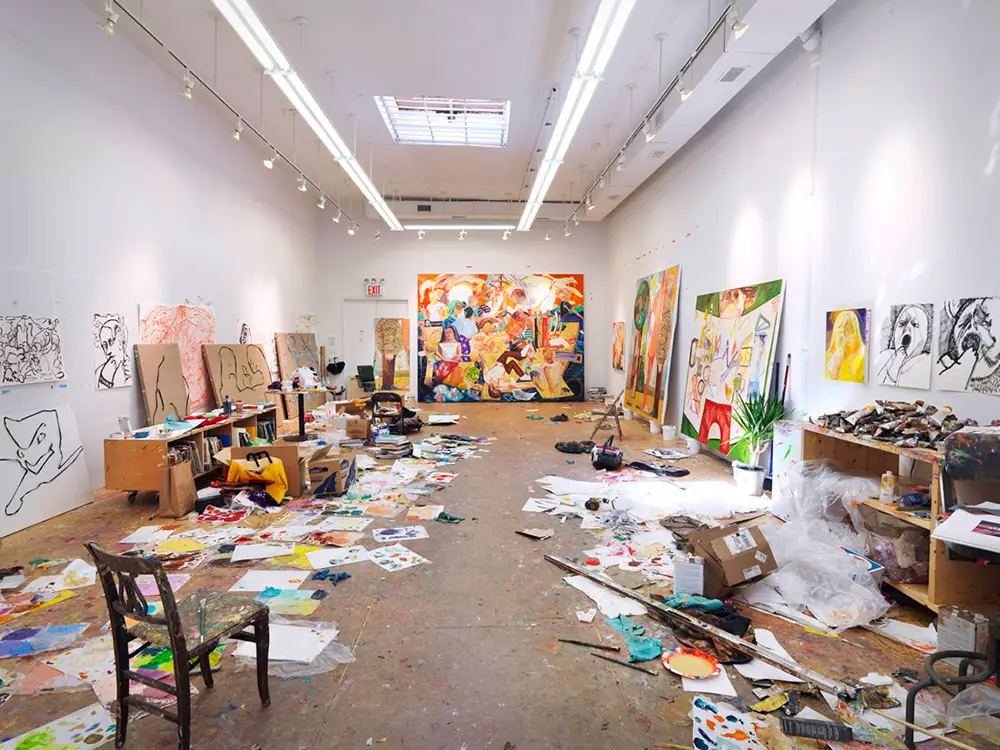
An artist’s studio is not just a workplace. It is the place where ideas get tested and abandoned, where half-finished canvases lean against the wall and new ones take their place. It is messy, personal, and full of context that you will never find on a gallery wall.
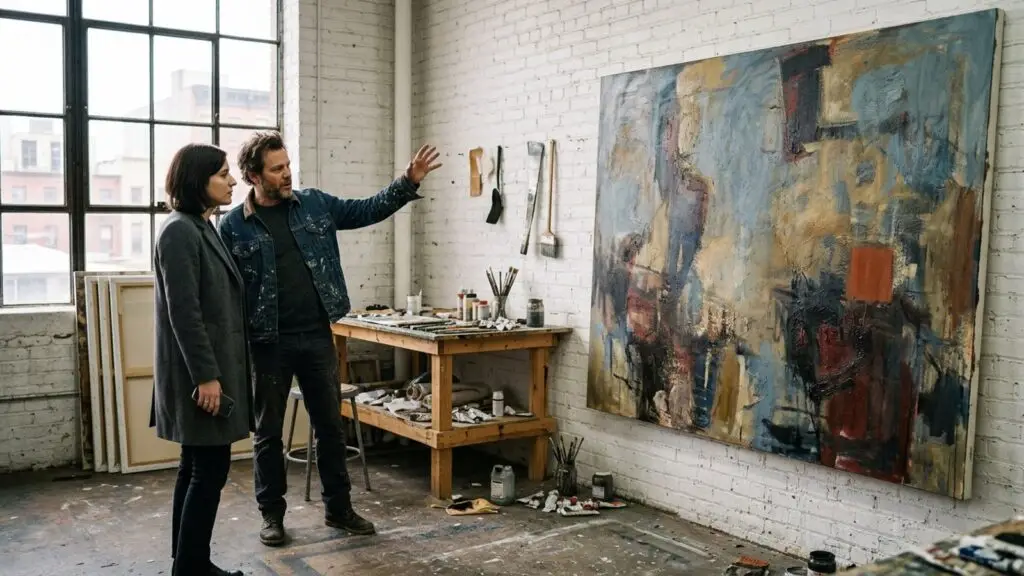
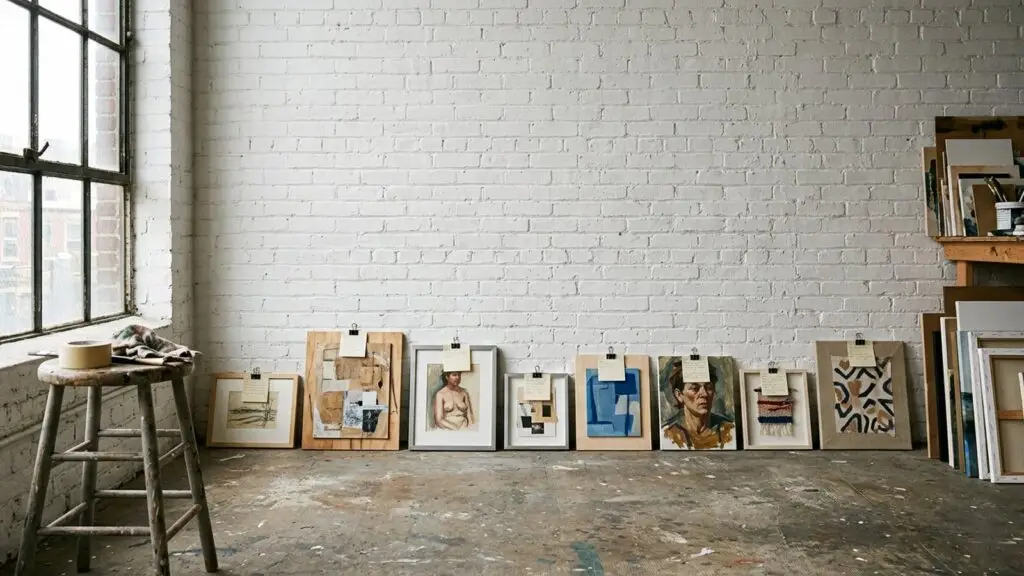
When you visit a studio, you don’t just see the finished work. You see the works in progress, the reference materials, the leftover experiments. You meet the person behind the practice. You get to ask the questions that a gallery opening rarely leaves room for: What are you working toward? Where did this series come from? What does your day actually look like?
That kind of access changes the way you experience art. And in a city like New York, where thousands of working artists share space across dozens of neighbourhoods, it is more available than most people realise.
The Neighbourhoods That Shape the Work
New York’s art scene has always been shaped by geography. Different neighbourhoods attract different kinds of artists, and over time they develop their own creative cultures.
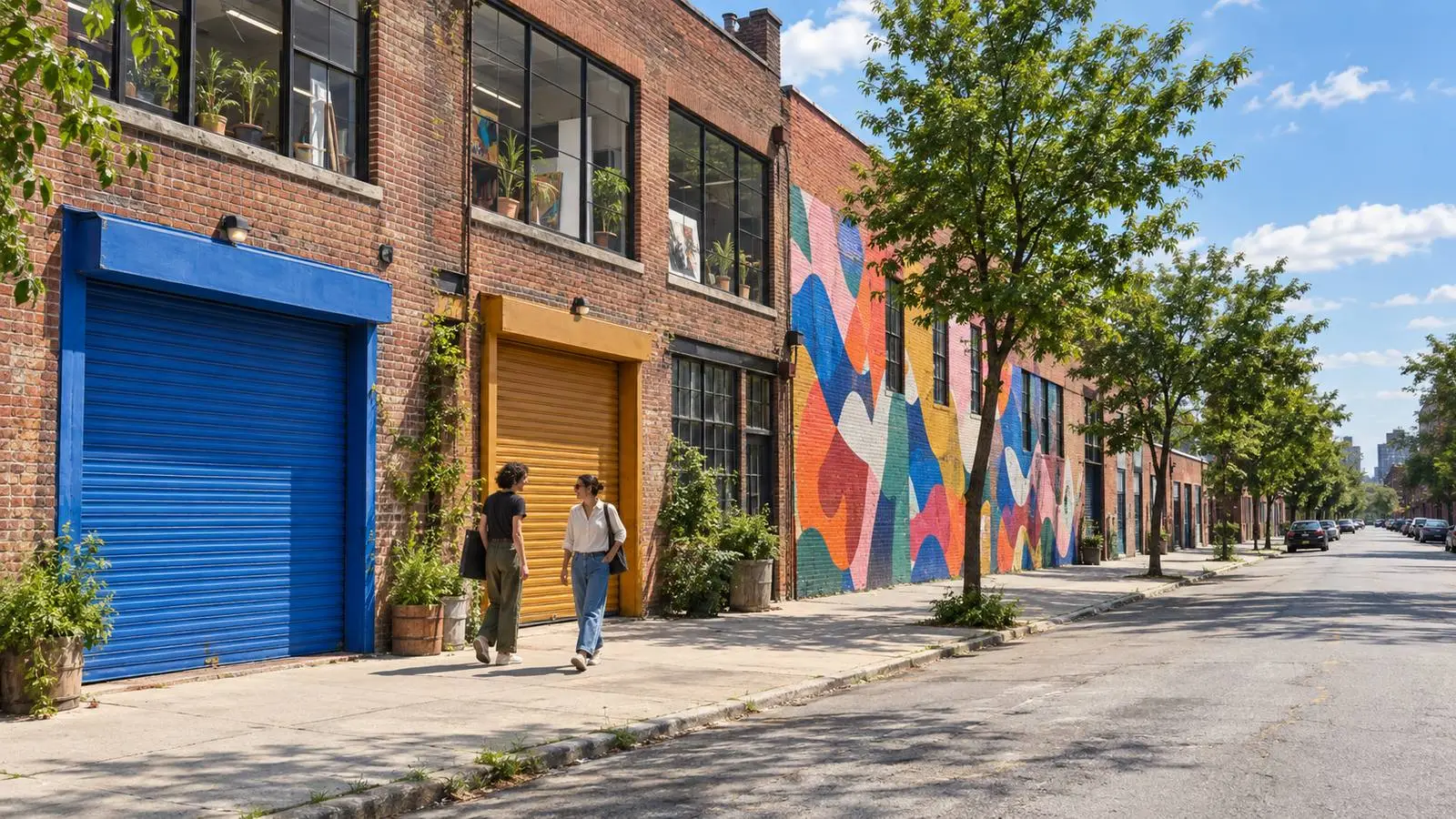
Bushwick, in Brooklyn, is probably the first name that comes to mind when people think of New York’s contemporary art scene. It is home to hundreds of working studios, many of them in converted industrial buildings. The neighbourhood has a raw, experimental energy. You’ll find painters, muralists, installation artists, and photographers all working within a few blocks of each other. The annual Bushwick Open Studios event draws tens of thousands of visitors each year, which is a sign of just how much is going on here.
Long Island City, in Queens, has a longer history as an artists’ neighbourhood than most people know. Sculptors and large-scale artists were drawn here decades ago for the space and the light. Today it sits just one stop from Midtown Manhattan on the subway, which makes it one of the more accessible studio destinations in the city.
The South Bronx has been home to a resilient and underrecognised arts community for decades. Artists here often work at the intersection of social practice, community engagement, and visual art. The studios are less polished and the scene is less curated, which is exactly what makes it worth visiting.
Dumbo and Red Hook, both in Brooklyn, attract artists who need proximity to the Manhattan gallery world while keeping the space and rent that the city’s most expensive neighbourhoods can no longer offer. The waterfront views don’t hurt either.
And then there is Harlem, which has its own long and complex artistic history and continues to be home to painters, photographers, and multidisciplinary artists whose work is deeply rooted in the neighbourhood they live and work in.
What Happens When You Visit a Studio
For many collectors, the first studio visit is a turning point. Not because they necessarily bought something, but because it changed the way they thought about collecting.
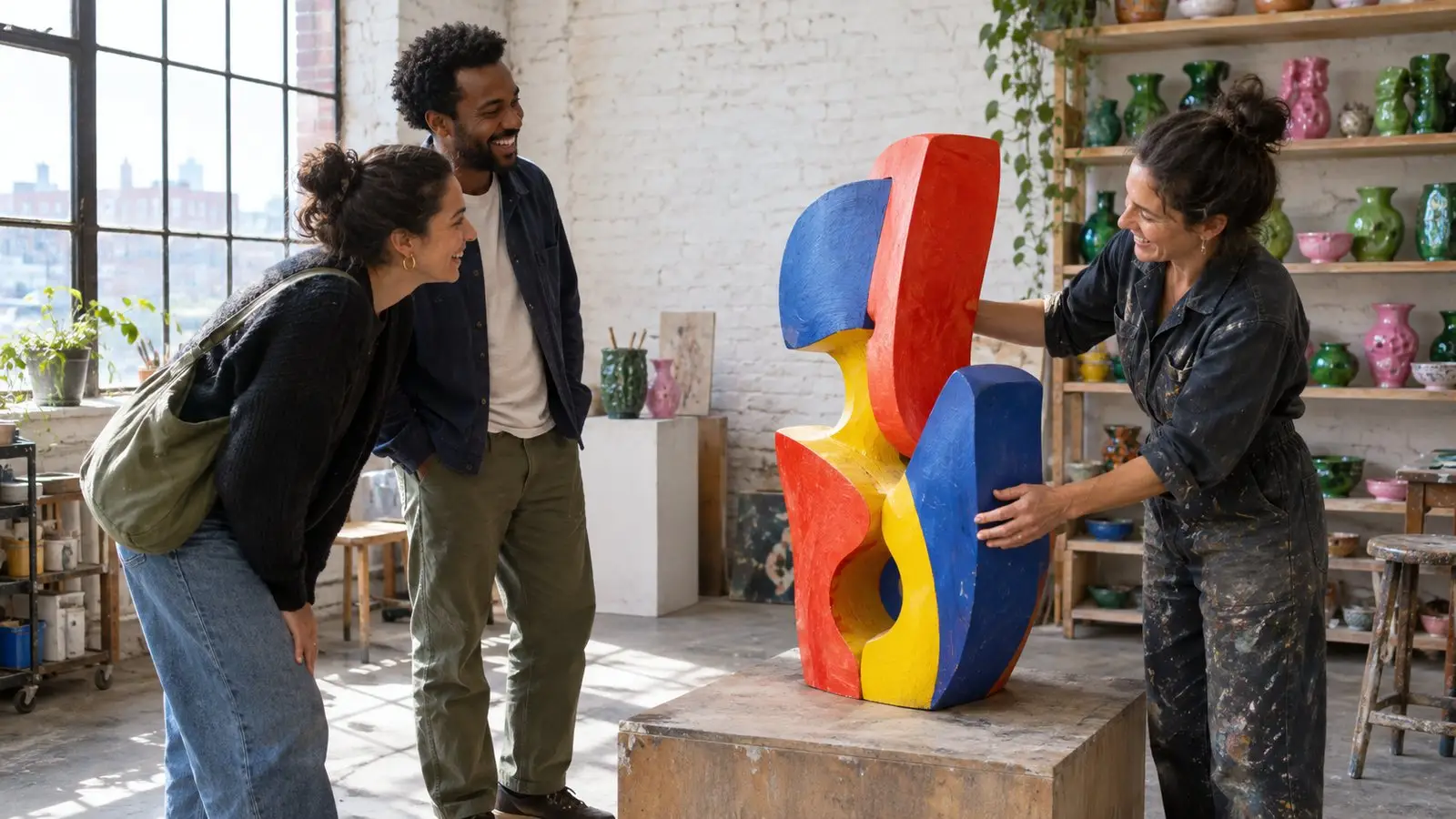
Buying art through a gallery is a transaction. Buying art from an artist you have met, in the space where the work was made, is something else entirely. The piece carries a different weight when you know the story behind it. You remember the conversation you had, the sketches pinned to the wall, the smell of paint in the air. That context becomes part of the work itself.
Studio visits are also simply a more honest way to experience art. There are no curators shaping the narrative, no lighting designed to flatter the work, no sales pressure disguised as small talk. It’s just you and the artist and the work. You can take your time. You can ask real questions and get real answers.
For emerging collectors, studio visits are one of the best ways to build an eye. Seeing work in progress, across multiple artists and multiple visits, teaches you things that no amount of museum-going can replicate.
How to Find Artist Studios in New York
This is where most people get stuck. The studios are there. The artists want visitors. But the infrastructure to connect them has always been scattered.
Some neighbourhoods organise annual open studio events. Some artists post on Instagram when their studio is open. Some you can only find through word of mouth, or by knowing the right people.
HEYATELIER exists to change that. The platform brings together working artists from across New York City, each with their own atelier page showing their practice, their work, and when their studio is open to visit. You can browse by neighbourhood, by medium, or simply by what catches your eye. No appointment needed, no gallery commission, no barriers.
If there’s a HEYATELIER Weekend coming up, even better. That’s when multiple studios across the city open simultaneously, and you can spend a day moving from studio to studio, meeting artists and seeing work that most people never get the chance to see.
New York’s Art Scene Is Bigger Than Its Galleries
The galleries on the Lower East Side and in Chelsea are important. The museums are world-class. But the living heart of New York’s art scene has always been in the studios, behind the doors that most people never think to knock on.
That is starting to change. More collectors, especially younger ones, are looking for something more direct. They want to know the people whose work they bring home. They want art that comes with a story, not just a certificate of authenticity.
New York’s artists are ready for that. Their studios are open. All you have to do is show up.
Browse artist studios in New York City on HEYATELIER. No account needed.